Moving to Florida in 2026: Why Homebuyers Continue to Choose the Sunshine State
Relocation guide · Florida
A move to Florida often starts with a small moment. Maybe it is another icy commute, the thought of spending more time outdoors, or the realization that your next home does not need to be in the same city where you built your career. Then the practical questions begin: Where would we live? What would it really cost? Would the lifestyle still make sense in August, not just in January?
Those are good questions to ask in 2026. Florida is still drawing interest from homebuyers who want warm weather, varied communities and more ways to shape their next chapter. But there is no single “Florida market,” and the right choice depends on the neighborhood, home type and total cost of ownership—not just the scenery.
If you are planning a move, start with the U.S. Prime Realty Florida relocation guide and use the Florida property search to compare homes as you narrow down your options.
Quick answer: Homebuyers continue to consider Florida in 2026 for its climate, lifestyle variety and lack of a state personal income tax. The tradeoffs are real: home prices, mortgage rates, hurricane exposure, insurance, property taxes and association fees vary widely. Compare the full monthly cost and visit a neighborhood in the season when you expect to live there.
What is in this guide
- Moving to Florida in 2026: Key Facts at a Glance
- 1. Sunshine and Outdoor Living Still Matter
- 2. No State Personal Income Tax Is an Attraction—But Do the Full Math
- 3. Florida Offers Very Different Ways to Live
- 4. The 2026 Housing Market Rewards Local Research
- 5. The Cost of Moving to Florida Is More Than the Mortgage
- Before You Buy a Florida Home, Ask These Questions
- How U.S. Prime Realty Can Help With Your Florida Move
- Frequently Asked Questions About Moving to Florida in 2026
Moving to Florida in 2026: Key Facts at a Glance
| What buyers ask | Current answer | Why it matters |
|---|---|---|
| Is Florida still growing? | 23.46 million people (2025 Census estimate) | The long-term trend is growth, but it does not predict appreciation in any neighborhood. |
| What is the statewide home price? | $415,000 single-family median sale price, Sept. 2026 | A midpoint for closed existing-home sales, not a price tag for every city. |
| What about condos/townhomes? | $293,500 median sale price, Sept. 2026 | Compare monthly dues, reserves, insurance and building documents. |
| Does Florida have income tax? | No state personal income tax | Federal taxes and other Florida taxes still apply. |
| Is there more negotiating room? | September supply: 4.4 months single-family; 7.7 months condo/townhome | Your bargaining position depends on local listings and property type. |
Sources: U.S. Census Bureau QuickFacts and Florida Realtors, September and Q3 2026 market release. Statewide figures should not be used as substitutes for city- or ZIP-code-level comparisons.
1. Sunshine and Outdoor Living Still Matter
There is a reason people imagine their mornings differently in Florida. Walks along the water, weekend boating, outdoor dining and parks can become ordinary parts of the week rather than occasional vacation activities. For buyers relocating from colder states, having more usable outdoor months is a meaningful lifestyle change.
Florida also has seasons—just not the ones many newcomers expect. Summers can be extremely hot and humid; afternoon storms and the Atlantic hurricane season are part of the calendar. A great relocation plan includes a summer visit, not only a winter getaway.
2. No State Personal Income Tax Is an Attraction—But Do the Full Math
Florida does not impose a state personal income tax. For some households, that changes the comparison with a state that taxes wages or other personal income. But it is only one line in the budget. Florida homeowners still pay property taxes and may face higher insurance or maintenance costs depending on the location and home.
The Florida Department of Revenue confirms the personal-income-tax rule. For an owner-occupied primary residence, review possible homestead exemptions and Save Our Homes benefits with the county property appraiser. Eligibility and taxable values are property-specific.
Before you compare two states based on taxes, ask your tax adviser how your residency, employment arrangements, income sources and timing affect your situation. Florida residency does not automatically resolve obligations in another state.
3. Florida Offers Very Different Ways to Live
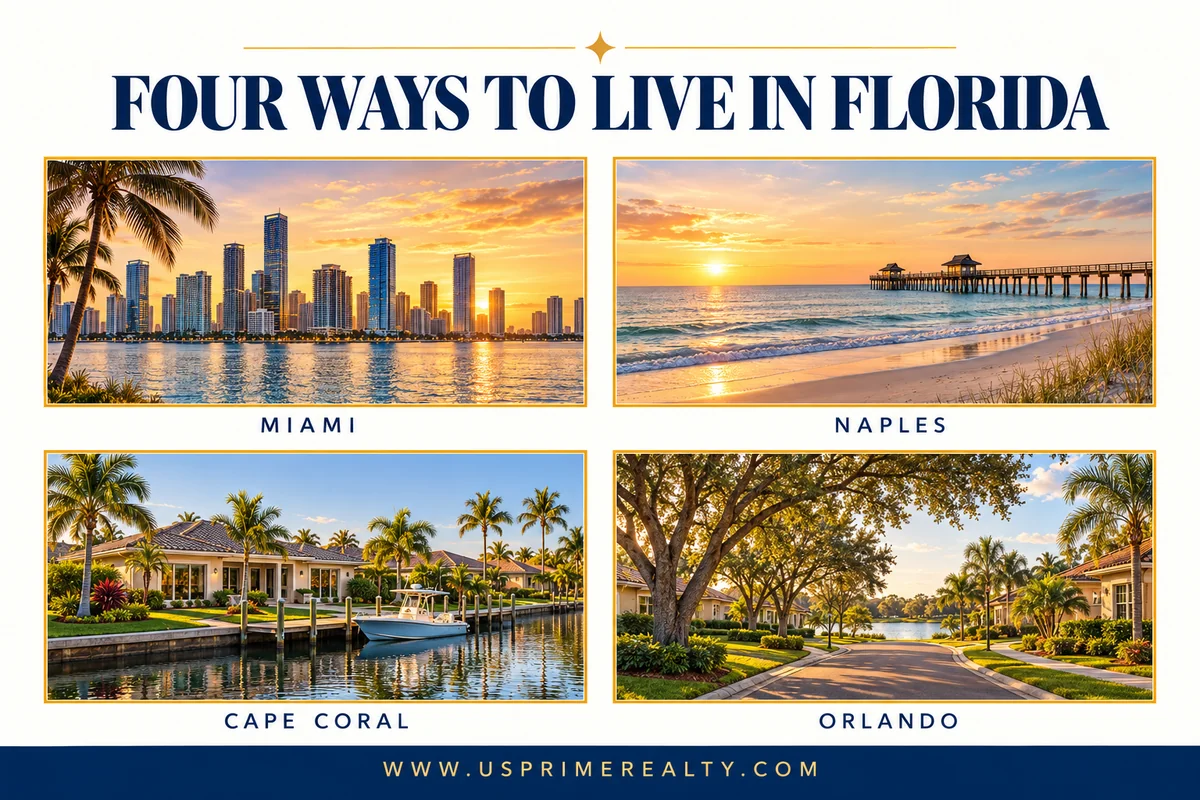
The biggest advantage of a statewide home search is variety. You can look for a high-rise close to restaurants and offices, a quiet Gulf Coast neighborhood, a canal-front property, or a newer suburban home with room to spread out. The price and daily routine can change dramatically within a short drive.
Miami, Brickell and Sunny Isles Beach: City Energy and Coastal Luxury
Miami-area buyers often prioritize international connections, dining, work opportunities and a mix of urban condominiums and waterfront residences. Brickell is a very different day-to-day experience from a quieter beachside street. For condo buyers, association finances, structural and reserve disclosures, parking and rental rules deserve the same attention as the view.
For a closer look at higher-end neighborhoods and ownership costs, read U.S. Prime Realty’s Florida real estate blog and explore current communities through the brokerage website.
Naples: Gulf Coast Living at a Different Pace
Naples appeals to buyers who like beaches, restaurants, golf and neighborhoods with a more relaxed rhythm. But “Naples” can mean a walkable coastal address, a gated community farther inland or a larger property with a very different commute. The practical comparison is between specific neighborhoods, not just city names.
U.S. Prime Realty’s 2026 Naples living guide explores the seasons, neighborhood differences and local living costs in more detail.
Cape Coral and Fort Myers: Space, Waterways and Everyday Convenience
Southwest Florida offers single-family neighborhoods, newer homes and, in some locations, access to canals and boating. That does not make every Cape Coral address waterfront—or every canal Gulf-access. Buyers should verify the lot, boating route, seawall condition, flood exposure and insurance quotes for the particular property.
A single-story home, newer construction or a larger yard may be a better match than a tower condo for some households. The comparison should include commute time, road access and storm preparedness as well as purchase price.
Orlando and Central Florida: Communities, Jobs and More Home Styles
Orlando-area buyers can compare established neighborhoods with growing master-planned communities, townhomes and new construction. Rather than shopping by a builder’s advertised base price alone, check school zoning where relevant, traffic patterns, HOA or CDD charges, lot premiums and how far the home is from the places you expect to visit every week.
If you prefer a home that has never been lived in, read the 2026 Florida pre-construction buyer’s guide before comparing builder incentives, contract deadlines and delivery dates.
Which Florida Area Fits Your Lifestyle?
| If you are looking for… | Start with… | Investigate before buying |
|---|---|---|
| Walkable urban living and condo amenities | Miami / Brickell | Condo assessments, reserves, parking, insurance |
| Oceanfront or luxury coastal living | Sunny Isles Beach / Miami coast | Flood exposure, condo documents, maintenance costs |
| Gulf Coast pace and beach access | Naples | Neighborhood pricing, seasonal traffic, HOA dues |
| Detached homes and possible boating access | Cape Coral / Fort Myers | Canal type, seawall, roof, flood and wind coverage |
| New communities and suburban variety | Orlando area | Commute, HOA/CDD charges, builder terms |
4. The 2026 Housing Market Rewards Local Research
Florida’s housing market is neither one endless bidding war nor one statewide bargain. Florida Realtors reported a September 2026 median sale price of $415,000 for existing single-family homes, up 1.2% from a year earlier. The condo-townhouse median was $293,500, down 1.8% year over year. Single-family closed sales declined 3.5% from September 2025 while condo-townhouse closings were nearly unchanged.
The bigger takeaway is that buyers have to think by market segment. A coastal condo with high association dues does not compete with a newly built detached home on the same terms. Properties with realistic pricing, sound condition and predictable carrying costs can make more sense than chasing a supposedly “hot” ZIP code.
See the Florida Realtors September 2026 housing release for the published data. Mortgage rates, contract terms, local supply and seller flexibility can change quickly, so request current financing estimates rather than relying on older online calculators.
5. The Cost of Moving to Florida Is More Than the Mortgage
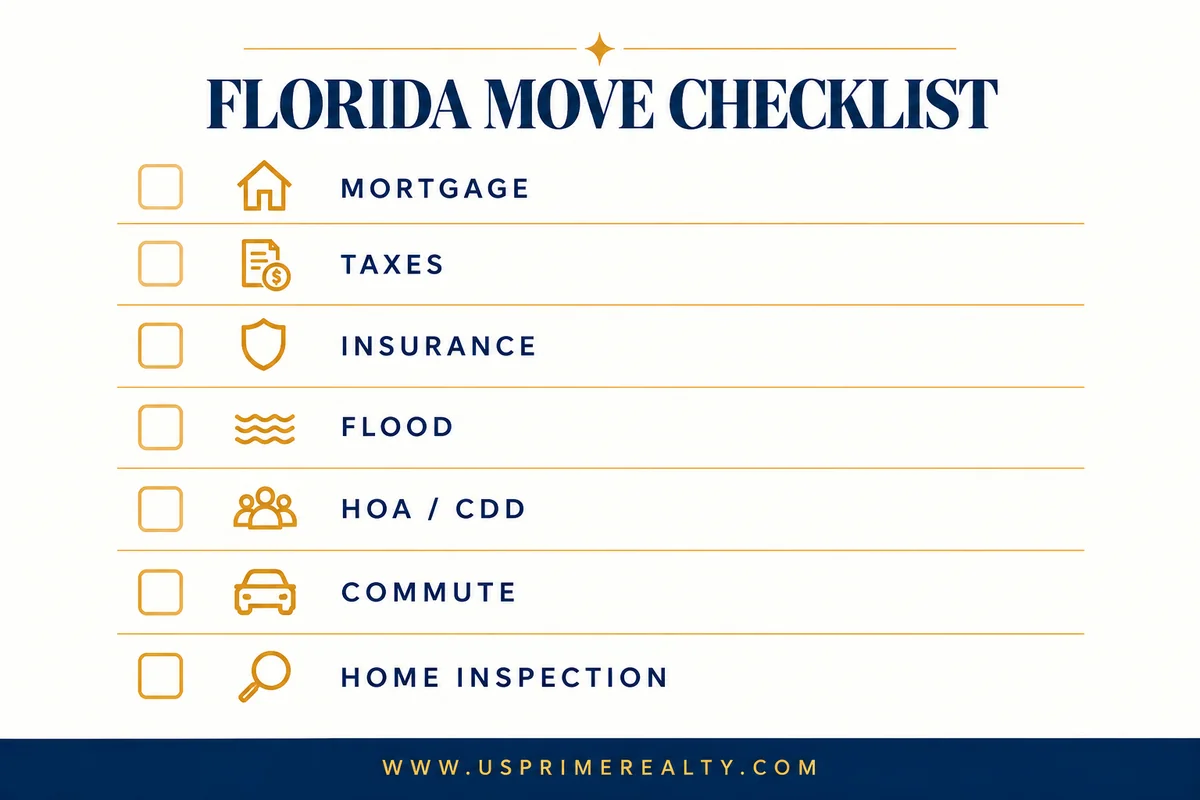
One of the easiest ways to misjudge a Florida home is to stop the budget at principal and interest. A purchase that looks comfortable online can feel very different after property taxes, homeowners or wind insurance, flood coverage, association fees, utilities, upkeep and future major repairs are included.
For coastal properties, request address-specific insurance quotes before you are deep into the contract. A FEMA flood-zone map is a starting point, not a full assessment of water risk; and standard homeowners coverage generally does not replace dedicated flood insurance.
Check the FEMA Flood Map Service Center and read U.S. Prime Realty’s Florida flood-zone guide for a practical walkthrough of the questions to ask.
Before You Buy a Florida Home, Ask These Questions
- Have I visited the neighborhood on a weekday, in traffic, and during the hot or rainy season?
- What is my all-in monthly ownership cost, using actual tax estimates and insurance quotes?
- Is the property in a mapped flood hazard area, and what is its elevation or prior flooding history?
- For a condo, have I reviewed budgets, reserves, assessments, insurance and governing documents?
- For a new home, what does the base price exclude and when is the home really expected to be ready?
- What are the commute, school, healthcare and daily-service options that matter to my household?
- Am I relying on a current lender estimate rather than an old advertised mortgage rate?
- What inspections, contract contingencies and professional advice do I need before closing?
How U.S. Prime Realty Can Help With Your Florida Move
A good relocation search begins with the life you want to have, not simply a list of properties. U.S. Prime Realty can help buyers compare Florida communities, identify property types that fit their goals and coordinate the next steps with licensed lending, insurance, inspection and legal professionals as needed.
Start with the Florida relocation guide, browse the latest Florida real estate articles and explore homes on U.S. Prime Realty.
Thinking about moving to Florida in 2026? Call U.S. Prime Realty at 239-513-0011 or email cc@usprimerealty.com. Tell us your preferred cities, price range and move timeline. Buy. Sell. Invest.
Frequently Asked Questions About Moving to Florida in 2026
Is Florida still a good place to move in 2026?+
Is Florida still a good place to move in 2026?
It can be an excellent fit for buyers who value the climate, outdoor lifestyle and range of communities. The decision depends on your budget, job or retirement plans, insurance costs and tolerance for summer heat and storm risk.
Does Florida have a state income tax?+
Does Florida have a state income tax?
No. Florida does not impose a state personal income tax. Buyers should still account for federal taxes, sales taxes, property taxes and possible taxes in other states.
How much does a house cost in Florida in 2026?+
How much does a house cost in Florida in 2026?
Florida Realtors reported a $415,000 statewide median sale price for existing single-family homes in September 2026. Your actual price will vary greatly by city, neighborhood and property type.
What are the best places to live in Florida for homebuyers?+
What are the best places to live in Florida for homebuyers?
There is no universal winner. Miami offers urban and coastal living, Naples offers a Gulf Coast lifestyle, Cape Coral and Fort Myers offer varied single-family choices, and Orlando has established and newly built communities.
Do I need flood insurance when buying a Florida home?+
Do I need flood insurance when buying a Florida home?
Not every home has the same insurance requirement. Lender and insurer rules vary, and flooding can happen outside high-risk map zones. Check the address, lender requirements and actual insurance quotes.
Is it better to buy new construction or an existing home?+
Is it better to buy new construction or an existing home?
New construction may offer modern layouts and builder warranties; existing homes may offer established neighborhoods and faster move-in options. Compare the final cost, contracts, inspections and location.
How can I prepare for a move to Florida from another state?+
How can I prepare for a move to Florida from another state?
Choose a few areas, test-drive daily routines, get lender and insurance estimates, research tax residency with a professional, and compare actual listings before committing to one city.
Share This
About The Author

Isbely Glazer - Founder and Broker of U.S. Prime Realty
Isbely brings over 20 years of experience across Florida’s key markets. She leads with a client-first approach, combining deep market insight with a commitment to trust, results, and long-term relationships.
Business Info


Recent Posts

Florida Real Estate Investment Guide 2026: Top Cities for Property Investors
Florida real estate investment guide 2026: compare Miami, Orlando, Tampa, Cape Coral, Fort Myers, Naples and Jacksonville, plus rental costs and risks.
What’s it really like to live in Orlando, Florida? The 2026 Guide
Moving to Orlando in 2026? Compare home prices, daily costs, neighborhoods, commutes, summer weather and the tradeoffs of living beyond the theme parks.
Orlando Florida Luxury Real Estate: 2026 Market Guide
Explore Orlando Florida luxury real estate in 2026: prices, Windermere, Winter Park, Lake Nona, 2026 housing data, lakefront costs and buyer tips.