What Does a Real Estate Agent Actually Do for Homebuyers?
Florida homebuyer guide · What your agent does
Finding a house online is easy enough. Buying it is where the questions start. What is a fair offer? Who checks the roof? What happens if the appraisal comes in low? And how do you know which deadline matters most?
If you have wondered, “What does a real estate agent do for homebuyers?”, the answer goes well beyond unlocking doors. A good Florida real estate professional helps you compare homes, understand your choices, coordinate the people involved and keep the purchase moving. At U.S. Prime Realty, that work begins with your plans—not a particular address. Here is what the process looks like from your first conversation to closing day.
Quick answer: A real estate agent helps homebuyers plan their search, evaluate properties and pricing, prepare and negotiate offers, track contract dates, coordinate inspections and move toward closing. The exact duties depend on the brokerage relationship and written agreement.
What is in this guide
- What a Florida Real Estate Agent Helps With at a Glance
- 1. Understanding Your Needs, Goals, and Budget
- 2. Finding Properties That Match Your Requirements
- 3. Scheduling and Conducting Property Showings
- 4. Analyzing Market Value and Preparing an Offer
- 5. Negotiating on Your Behalf
- 6. Managing Paperwork and Important Deadlines
- 7. Coordinating Inspections and Due Diligence
- 8. Guiding Buyers Through Closing Day
- 9. What a Real Estate Agent Does Not Do
- 10. Why Working With a Real Estate Agent Can Make a Difference
- How U.S. Prime Realty Helps Florida Homebuyers
- Conclusion: Your Real Estate Agent Is Your Guide to Homeownership
- Frequently Asked Questions About Florida Buyer’s Agents
What a Florida Real Estate Agent Helps With at a Glance
| Homebuying task | How the agent helps | What buyers should check |
|---|---|---|
| Goals and budget | Clarifies needs and a practical search area | Taxes, insurance and monthly costs |
| Home search and tours | Finds options and schedules visits | Location, condition and association rules |
| Offer and negotiation | Reviews comparable sales and communicates terms | Price, deposits and contingencies |
| Inspection and paperwork | Coordinates professionals and tracks deadlines | Inspection findings and contract dates |
| Closing | Keeps parties aligned and supports final walkthrough | Closing Disclosure and transfer details |
Florida note: Representation and compensation are not automatic or identical in every transaction. Ask which brokerage relationship applies and review any buyer agreement before signing.
1. Understanding Your Needs, Goals, and Budget
Identifying Your Homebuying Priorities
Your agent should start by listening. Are you buying your first place, relocating to Florida or looking for a waterfront home with room for a boat? A Naples condominium, a Cape Coral canal home and an Orlando single-family property may offer very different day-to-day experiences. An agent helps separate nonnegotiables—such as commute, bedrooms or accessibility—from features you might happily compromise on.
Establishing a Realistic Budget
The mortgage payment is only part of your budget. Florida buyers also need to consider property taxes, homeowners and flood insurance where appropriate, HOA or condominium fees, utilities and maintenance. An agent can help you ask the right cost questions and connect you with lenders; only a lender can determine loan eligibility and terms. Start with our Florida financing resources to understand the options worth discussing.
2. Finding Properties That Match Your Requirements
Searching Homes and Spotting Better Fits
Online photos can make almost any property look appealing. Your agent adds context: whether the home fits your actual priorities, how quickly similar homes are moving and which details deserve a second look. They can monitor available properties and flag new opportunities while you explore the current homes and search tools on the U.S. Prime Realty buyer page.
Comparing Properties and Neighborhoods
Florida is not one housing market. In Miami, condominium budgets and building documents can matter as much as the view. In Cape Coral, canal access, bridges and flood exposure may shape a waterfront search. Around Orlando, commute routes and community fees can change the picture. An agent can provide objective property information and direct you to independent sources rather than making assumptions about a neighborhood or its residents.
3. Scheduling and Conducting Property Showings
Arranging Home Viewings
Your agent coordinates appointment windows, access instructions and communication with the listing side. For out-of-state buyers, that may include live video tours. Before you enter homes with an agent working with you, ask about any written touring or buyer representation agreement and the services and compensation it covers; Florida Realtors explains how these agreements operate.
Looking Beyond the Photos
A showing is your chance to notice the practical things: an awkward layout, limited storage, street noise, drainage patterns or signs of deferred maintenance. Your agent can help build a question list and identify items for further review, but cannot replace a qualified inspector. Take notes after each tour; by the fifth house, it is surprisingly easy to mix up the kitchens.
4. Analyzing Market Value and Preparing an Offer
Reviewing Comparable Sales
A listing price is an asking price, not proof of value. Your agent can examine recent comparable sales, currently competing homes, property condition and neighborhood activity. A comparison should be specific: a waterfront house with direct Gulf access is not necessarily comparable to one on a restricted canal, and two condos in the same building may have different views or monthly fees.
Structuring an Offer That Fits Your Situation
An offer involves more than a number. The proposed price, earnest-money deposit, financing terms, inspection provisions, closing date and any seller concessions all affect the deal. Your agent can explain common choices and help present your preferred terms. If a property has an unusual title issue, condominium concern or complex contract provision, obtain advice from the appropriate licensed professional before committing.
For a step-by-step overview, read U.S. Prime Realty’s guide to buying a home in Florida.
5. Negotiating on Your Behalf
Price Is Only One Negotiating Point
Your offer may spark a counteroffer. An agent communicates with the seller’s representative, helps you consider tradeoffs and keeps the conversation focused on the terms that matter to you. Sometimes that means negotiating the price. Other times it means asking for a repair credit, adjusting a closing date or clarifying which appliances stay with the home.
You Stay in Control
A useful agent explains the likely consequences without pressuring you to stretch past your limit. No one can promise a discount or guarantee that an offer will be accepted. The final decision about what to offer—and when to walk away—is yours. The agent’s role and obligations also depend on whether the relationship is transaction brokerage or single agency under Florida law.
6. Managing Paperwork and Important Deadlines
Keeping Transaction Documents Organized
Once a seller accepts, the process becomes a stream of forms, requests and confirmations. Your agent helps prepare or circulate documents within their licensed role, confirms that the right parties receive them and tracks what is still outstanding. Buyers should read each document themselves and ask for legal advice whenever a clause is unclear or has significant consequences.
Tracking the Dates That Count
Inspection periods, financing requirements, deposit dates and closing schedules deserve real attention. The consequences of missing a deadline depend on the specific signed contract. An agent can maintain a timeline, remind you of approaching obligations and coordinate with the lender, title company and other professionals. That is often the quiet work buyers appreciate most.
7. Coordinating Inspections and Due Diligence
Getting the Right Specialists Involved
A home inspection may uncover issues that photos never reveal. Your agent can coordinate access and help you arrange conversations with licensed inspectors, roofers or other specialists as needed. In Florida, buyers may also need to evaluate wind mitigation, four-point insurance inspections, flood exposure, permits and, for condos, association and building records. Check a specific property using FEMA’s official Flood Map Service Center.
Deciding What Happens After the Report
Inspection results can lead to follow-up questions, requests for repairs or further negotiations, depending on your contract. Your agent can help communicate those requests, but your inspector assesses condition and a lawyer interprets your legal rights. Do not assume every Florida contract gives the same cancellation options or that a seller must agree to repairs.

8. Guiding Buyers Through Closing Day
Preparing for the Final Walkthrough
Before closing, you may have the opportunity to walk through the property and check whether it remains in the agreed condition. Your agent can attend, help compare what you see with contract expectations and communicate outstanding concerns. This is not a replacement for a professional inspection, and concerns should be raised before closing when possible.
Coordinating With Lenders and Closing Professionals
The lender, title or closing agent and, where appropriate, attorneys handle their specialized responsibilities. Your real estate agent helps keep communication moving so you know what documents, funds or signatures remain. For most covered mortgage loans, the lender must provide the Closing Disclosure at least three business days before closing; compare it against the Loan Estimate and question unfamiliar charges.
9. What a Real Estate Agent Does Not Do
Knowing When Another Expert Is Needed
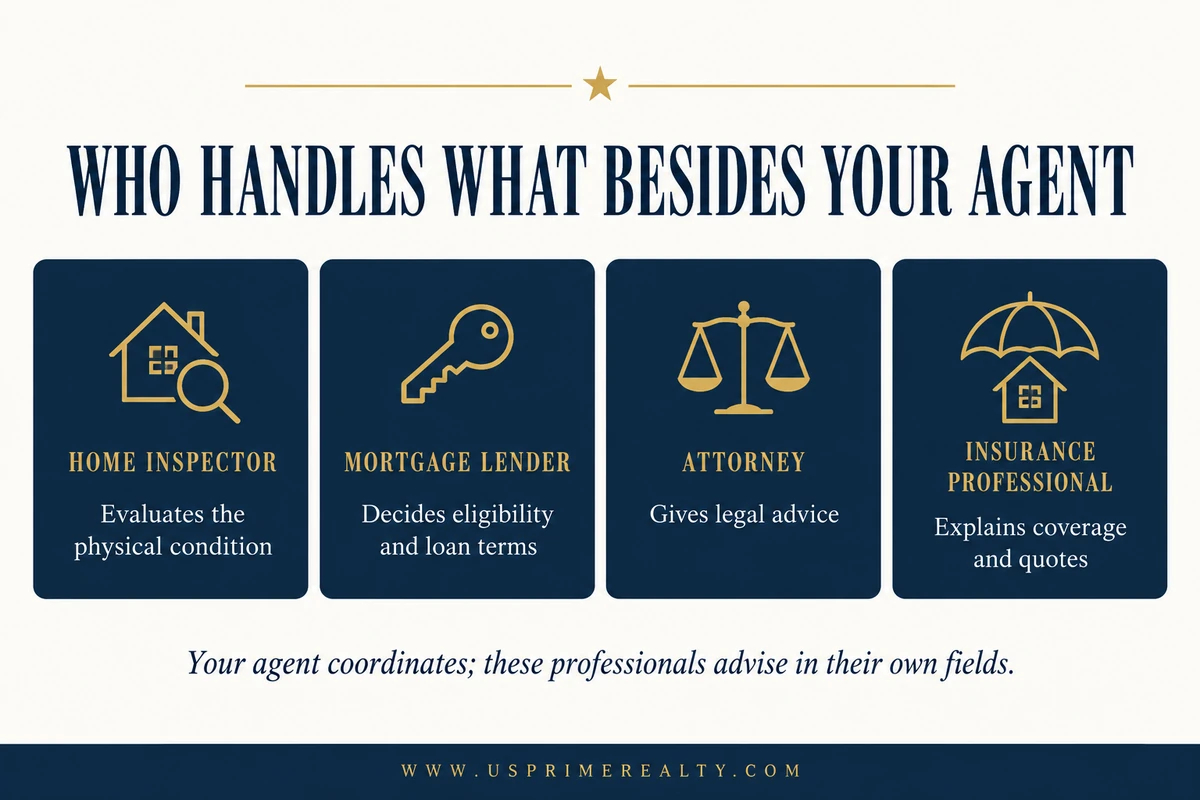
Your agent is an important coordinator, not an all-purpose specialist. A licensed home inspector evaluates physical condition. A mortgage lender decides credit eligibility and loan terms. An attorney gives legal advice, and a tax professional explains tax consequences. Insurance professionals provide coverage options and quotes. An agent also cannot guarantee future appreciation, accurate insurance renewals or a problem-free property. The buyer ultimately decides what risks and terms are acceptable.
10. Why Working With a Real Estate Agent Can Make a Difference
Local Context and One Point of Contact
Imagine comparing a Naples condo to a Cape Coral waterfront house. The documents, insurance questions and property features are different, even if the purchase price looks similar. Having someone organize the search, explain comparable sales, communicate offers and monitor closing steps can make the process more manageable. The benefits of a buyer’s agent depend on the agreed services and actual brokerage relationship—not a promise that every transaction will be easy.
How U.S. Prime Realty Helps Florida Homebuyers
U.S. Prime Realty has served Florida since 2008, with offices in Naples, Cape Coral, the Miami/Hallandale Beach area and Orlando. Our team helps buyers clarify their search, compare properties and navigate purchase steps with local market insight. Whether you are shopping for a first home or weighing waterfront options, we can help you identify the questions to ask before making a commitment. Explore our first-time homebuyer resources for a helpful starting point.
Conclusion: Your Real Estate Agent Is Your Guide to Homeownership
So what does a real estate agent actually do for homebuyers? They help turn a long list of decisions into an organized plan—from setting priorities and finding suitable homes to evaluating offers, handling deadlines and preparing for closing. In Florida, the best approach is to understand the agent’s role, ask about representation and compensation, and bring in specialists when needed.
Ready to Start Your Homebuying Journey?
Talk with U.S. Prime Realty about where you want to live, what matters most and what questions are holding you back. Visit our contact page or call (239) 513-0011 to connect with a Florida real estate professional. Buy. Sell. Invest.
Frequently Asked Questions About Florida Buyer’s Agents
Do I need a real estate agent to buy a house in Florida?+
Do I need a real estate agent to buy a house in Florida?
You can buy a home without one. Many buyers choose professional help for local comparisons, offers, deadlines and coordination. Review the services and agreement before deciding.
Does a buyer have to sign an agreement before seeing homes?+
Does a buyer have to sign an agreement before seeing homes?
For agents subject to applicable MLS/NAR practice requirements and working with buyers, a written agreement is generally required before touring a home. Ask what agreement applies to your situation and read it carefully.
Who pays the buyer’s real estate agent in Florida?+
Who pays the buyer’s real estate agent in Florida?
Compensation is negotiable and is not fixed by law. A buyer agreement should explain the services and compensation. Depending on the transaction, payment may be negotiated with a seller, but never assume the seller will pay.
What is a transaction broker in Florida?+
What is a transaction broker in Florida?
Florida generally presumes transaction brokerage unless another brokerage relationship is established through the required disclosure. A transaction broker provides limited representation and does not owe the same fiduciary duties as a single agent.
Can my agent tell me whether a Florida home is in a flood zone?+
Can my agent tell me whether a Florida home is in a flood zone?
An agent can direct you to public flood maps and questions to investigate. Verify the exact address through FEMA and obtain property-specific insurance advice and quotes.
What should I ask an agent before hiring them?+
What should I ask an agent before hiring them?
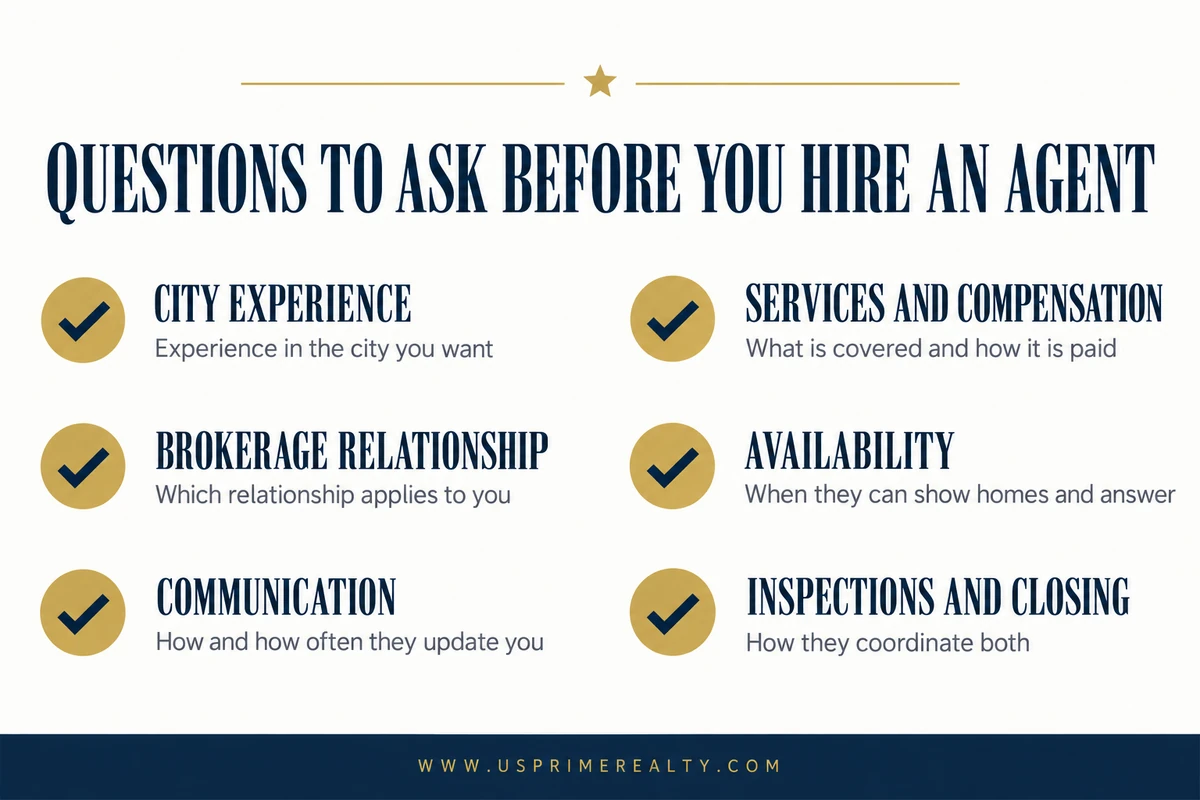
Ask about experience in your chosen city, their brokerage relationship, communication habits, services, compensation, availability and how they coordinate inspections and closing.
Important information: This guide is general information, not legal, tax or financing advice. U.S. Prime Realty is a licensed Florida real estate brokerage (BK3153881), not a mortgage lender, insurer or law firm. Loan eligibility, rates and terms are determined by the lender, and brokerage duties depend on the written agreement and the relationship you choose.
Share This
About The Author

Isbely Glazer - Founder and Broker of U.S. Prime Realty
Isbely brings over 20 years of experience across Florida’s key markets. She leads with a client-first approach, combining deep market insight with a commitment to trust, results, and long-term relationships.
Business Info


Recent Posts

What Is Florida Amendment 3, and How Could It Affect Property Taxes and Homeowners?
What is Florida Amendment 3? Explore proposed 2027–2028 homestead exemptions, property tax caps, homeowner impacts and the November 2026 vote.
Would You Buy a Haunted House? How a Home’s History Can Affect Its Value
Would you buy a haunted house? Discover how a home’s history affects property value, buyer demand, disclosures, negotiations and resale.
Renting vs. Buying a Home in Florida in 2026: Costs, Benefits, and What to Know
Renting vs. buying a home in Florida in 2026? Compare rent, mortgage costs, insurance, taxes, down payments and which choice may fit your plans.