Sales Volume by Market
2,280
2,270
2,002
1,090
1,025
435
Palm Beach
Broward
Miami-Dale
Orlando
Tampa
Naples
Stay informed with our Florida real estate market analysis. We track pricing trends, inventory shifts, days on market, and demand signals across Naples, Miami, Orlando, and Fort Myers. Whether you’re an investor evaluating ROI or a buyer timing your purchase, our data-driven insights help you make smarter decisions.
↑ 0.2% from last week
↓ 2 days from last week
↑ 1.6% vs last week
↓ 0.1 from last month
↓ 0.05% this quarter
This page was last updated on: September 18, 2026
Miami-Dade's latest figures continue to show prime single-family and luxury tiers outperforming the broader regional market. Total transactions stabilized at 1,769 sales, with luxury transactions ($1 million and above) continuing to capture an outsized share of total volume. Single-family median sale prices held firm at $680,000 (up 3.8% year-over-year), while existing condo median prices slipped 0.5% to $408,000. Supply dynamics maintain a strict split: active single-family inventory contracted 19.2% year-over-year to 4,330 homes (4.9 months of supply), while existing condo inventory sits at 11,495 units (12.1 months of supply). Single-family, luxury, and waterfront properties continue to retain clear pricing power, whereas existing condominiums offer buyers ample selection and deep negotiating room.
Naples' latest activity confirms an orderly transition toward balanced market conditions. Active listing volume moderated further to approximately 4,280 properties, bringing overall supply down to 5.6 months. Closed sales rose to 748, while the median closed sale price settled near $588,500. Days on market averaged 112 days, reflecting measured due diligence from retirees and second-home buyers rather than urgent bidding. The window for aggressive discounts has narrowed on turnkey properties in gated golf and coastal communities, though older, unrenovated listings with extended days on market still provide room for meaningful concessions.
Tampa remains one of the state's most navigable metros for starter homes. The median listing price settled at $424,933, while median home values edged down 0.3% year-over-year to $377,566. Homes spent a median of 70 to 74 days on the market, and approximately 24.8% of active inventory has undergone at least one price reduction. Even with active inventory tapering slightly year-over-year, buyer leverage remains intact for homes priced near or slightly above local median thresholds. Buyers looking in suburban Hillsborough and Pasco corridors continue to find opportunities to secure seller-paid rate buydowns and closing credits.
Orlando's rental sector remains tenant-friendly into late summer. Average market rent held flat month-over-month at $1,900 across all bed types (down $95 year-over-year), with roughly 3,580 rental listings available. The for-sale segment mirrors this caution: the median listing price reached $422,000 (down 1.5% year-over-year), median days on market held near 73 days, and over 22% of active listings feature price cuts. With rent growth subdued, multi-property investors and BRRRR buyers should focus underwriting strictly on in-place cash flows, tenant retention, and realistic operational expenses rather than projecting near-term rent hikes.
Cape Coral's for-sale supply continues to consolidate while tenant demand adjusts. The median single-family sale price hovered near $398,000, and months of supply tightened to 4.3 months across the broader metro. Active for-sale inventory contracted another 3.8% over the trailing month. In contrast, rental rates softened marginally, with average rents slipping to $1,935 (down $8 month-over-month and $62 year-over-year). For buy-and-hold investors, the gap between resilient home prices and stagnant rents requires strict discipline around property taxes, windstorm insurance premiums, and proximity to major employment bridges into Fort Myers.
Broward County continues to display a stark bifurcation between single-family homes and high-density condos. August single-family closed sales reached 1,016 transactions, with median prices advancing 4.0% year-over-year to $650,000. By comparison, condo sales fell 9.3% to 883 transactions, with a median price of $257,500. Single-family inventory dropped 22.5% to 4,252 listings (4.1 months of supply, moving to contract in a median 40 days). Existing condos carry 9.9 months of supply and a median 73 days to contract, burdened by HOA reserve funding and insurance overhead. Investors targeting eastern Broward and waterfront canal homes benefit from tight single-family scarcity, while opportunistic buyers in the condo segment hold substantial bargaining leverage.
Prime waterfront and luxury single-family tiers command strong pricing power, while an abundant condo supply gives buyers substantial negotiating room.
Tempered price velocity and widespread listing reductions maintain an accessible environment for first-time buyers seeking rate buydowns and seller concessions.
Steady absorption brings overall supply down to 5.6 months, gradually narrowing buyer leverage on prime properties within established golf and coastal communities.
South Florida’s real estate market remains fundamentally shaped by its global diversity and sustained domestic migration. Miami-Dade County alone is home to residents from over 150 nations, with Hispanic and Latino populations representing more than 72% of the demographic fabric. This cultural richness is paired with a steady influx of high-earning domestic transplants from New York, California, and Chicago, creating a dual-audience dynamic: international capital seeking wealth preservation and domestic corporate leaders seeking tax domicile.
The multilingual nature of the market is an absolute baseline. Spanish serves as the primary language in over 60% of Miami-Dade households, with Brazilian Portuguese, Haitian Creole, and French driving significant regional micro-markets. Modern marketing demands fluency in international purchasing structures, localized financial vernacular, and cross-cultural deal etiquette rather than simple language translation.
Age distribution across Florida’s metros has crystallized into distinct lifestyle tiers:
• The Emerging Professional Belt (Tampa & Orlando): Driven by medical, tech, and aviation hubs, these markets attract Millennials and Gen Z buyers. Marketing must center on turn-key affordability, smart-home automation, walkability, and digital-first transparency (interactive floor plans, virtual walk-throughs, and instant text response).
• The Coastal Wealth & Retiree Haven (Naples, Cape Coral & Palm Beach): Boasting communities where residents aged 65 and older exceed 35% of the population, these buyers prioritize legacy asset creation, healthcare accessibility, golf/racquet club culture, and single-level luxury living. Discretion, white-glove advisory, and private client referrals outweigh mass digital campaigns.
Latin American capital continues to underpin the South Florida luxury and pre-construction condo pipeline. Buyer motives differ sharply across nationalities:
• Brazil & Colombia: Primarily hedge-oriented buyers seeking lifestyle-driven assets in Brickell, Edgewater, and Sunny Isles. They heavily favor newly developed branded residences offering short-term rental flexibility or hotel-program management.
• Argentina & Venezuela: Frequently seeking primary residency or multi-generational relocations. Priorities lean heavily toward private school districts, security infrastructure, and single-family communities in Doral, Weston, Coral Gables, and Coconut Grove.
• Canadian Buyers: Remaining vital cross-border participants, Canadian winter “snowbirds” have increasingly pivoted toward turnkey condo-hotels and coastal single-family homes across Palm Beach, Fort Lauderdale, and Naples.
• Western European Capital: High-net-worth buyers from the UK, Germany, and Switzerland target trophy waterfront properties, architectural estates, and equestrian compounds in Wellington, driven by currency stability and favorable year-round outdoor lifestyle amenities.
The winter season remains the premier acquisition window, coinciding with high-profile cultural anchors such as Art Basel Miami Beach, the Palm Beach International Boat Show, and major winter equestrian circuits.
Marketing strategies during this cycle prioritize off-market exclusivity, VIP open-door previews, and private asset showcases. Well-capitalized buyers arrive motivated to execute contracts ahead of year-end tax planning and spring tax filings.
The summer months represent the peak window for domestic primary relocations and local move-up buyers. Families with school-age children concentrate home inspections and closings during this quarter to establish school residency. Marketing must pivot to highlight outdoor kitchens, private pools, community safety, and proximity to top-tier private and public schools.
Addressing Atlantic storm seasonality requires proactive transparency rather than avoidance. Today’s buyers evaluate operational continuity:
• Whole-home backup generators and integrated battery-storage walls.
• Post-2020 impact-rated glazing and elevated finished-floor elevations.
• Up-to-date roof certifications and documented mitigation credits that translate into reduced windstorm insurance premiums.
Miami operates as a sovereign financial and lifestyle gateway. The ultra-prime submarkets (Star Island, Indian Creek, Coconut Grove, Key Biscayne) require relationship-driven, off-market marketing tailored to family offices and private wealth advisors. Concurrently, dense urban corridors like Brickell and Downtown demand high-velocity marketing for branded residences (e.g., Aston Martin, Mandarin Oriental, Cipriani) targeting international investors.
Tampa and Orlando represent Florida’s economic growth centers. Driven by tech corridors, corporate relocations, and master-planned communities (Lake Nona, Westshore, Lakewood Ranch), marketing in these metros must focus on:
• Infrastructure expansion and transit connectivity.
• Long-term equity appreciation and employment stability.
• Strategic developer incentives, including permanent rate buydowns and flex-cash closing credits.
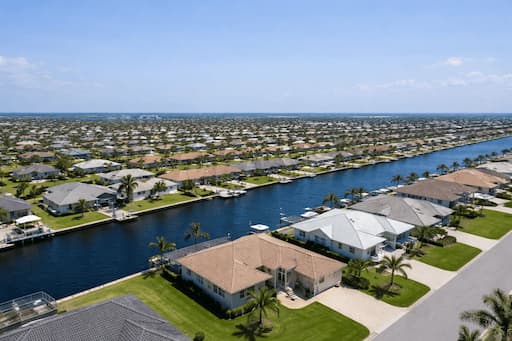
Naples, Marco Island, and Cape Coral demand positioning focused on privacy, low-density living, and country-club exclusivity. With supply returning to normalized balance, successful marketing differentiates properties by HOA financial health, turnkey custom interior design, direct Gulf access without low-bridge clearances, and proximity to healthcare campuses.
With market rents normalizing across the state, investment marketing requires disciplined financial presentation:
• Short-Term Rentals: Focus marketing on verified municipal zoning compliance, historical occupancy rates, and professional management partnerships in high-demand pockets like Miami Beach and Fort Lauderdale.
• Long-Term Single-Family Rentals: Present clear capitalization rates, realistic insurance and property-tax escrows, and long-term tenant retention profiles in stable job centers like Tampa, Orlando, and western Broward.
Florida’s absence of personal income tax, inheritance tax, and capital gains tax remains one of the primary drivers of wealth migration from high-tax jurisdictions (New York, California, New Jersey, Massachusetts).
Marketing should provide clear resources on establishing legal Florida domicile, Homestead Exemption asset-protection benefits, and the 3% annual assessment cap on primary residences.
At the $5M+ threshold, real estate transitions into an alternative asset class. Marketing strategies must emphasize:
• Architectural pedigree and bespoke construction.
• Advanced physical and cyber-security systems.
• Turnkey, fully curated lifestyle offerings (e.g., deeded mega-yacht slips, private art storage, and private aviation access).
Real estate marketing now incorporates AI-powered buyer-intent modeling, targeted geo-fencing, and dynamic pricing algorithms. In the luxury sector, immersive digital twins and interactive 3D renderings have become standard for pre-construction sales to international buyers purchasing prior to groundbreaking.
Following Florida’s structural integrity reserve legislation (Senate Bill 4-D and Milestone Inspections), condo marketing requires unprecedented operational transparency. Marketing successful condominium inventory requires clear documentation of:
• Fully completed Structural Integrity Reserve Studies (SIRS).
• Fully funded reserves and clear assessment schedules.
• Proactive building maintenance logs that provide confidence to buyers and lenders alike.
Sustainability has evolved from an ethical consideration into a core underwriting requirement. Properties exhibiting fortified building standards, advanced flood mitigation, LEED or Florida Green Building Coalition certifications, and lower flood insurance scores capture clear pricing premiums from risk-conscious buyers.
Hybrid corporate structures continue to support demand for adaptable residential layouts. Modern marketing highlights dual executive home offices, dedicated multi-generational guest suites, soundproof media pods, and community co-working lounges catering to decentralized corporate executives.