If you are evaluating a Cape Coral investment property in 2026, the honest starting point is that most of the numbers circulating about this market are wrong. The cap rates quoted in Cape Coral investor content are gross yields. The ZIP usually named as highest-yielding is third. The property tax figure most calculators use applies to homesteaded owners, not investors. And the seawall cost most buyers budget is roughly a quarter of what Southwest Florida contractors actually charge.
What follows is built from sourced data: the Lee County Property Appraiser’s millage book, the Florida Office of Insurance Regulation’s premium report, MLS medians, Zillow value and rent indices, two independent short-term rental datasets, and the City of Cape Coral fee schedule. Every number carries its date and its source. Where two credible sources disagree, both are shown.
What is in this guide
- What the Cape Coral market is actually doing in 2026
- Best ZIP codes for a Cape Coral investment property
- The waterfront premium: off-water, freshwater, and Gulf access
- What a Cape Coral rental property really costs to operate
- The cap rate math, shown in full
- Short-term rental rules and financing for 2026
- Buying remotely without getting burned
- Frequently asked questions
What the Cape Coral market is actually doing in 2026
Cape Coral is in a values correction, not a demand collapse, and the two most-cited measures of the market disagree in a way worth understanding before you underwrite anything.
Zillow’s Home Value Index for Cape Coral sat at $337,507 as of July 31, 2026, down 5.0% year over year. Over roughly the same window, Redfin reported a median sale price of $369,799 in June 2026, up 0.7%, and MLS-sourced data put July’s citywide median at $385,000. Both are accurate. A value index tracks the same properties over time; a median sale price tracks whatever sold that month. Together they describe a market where values have softened while the mix of what closes has drifted upmarket. Our running read on Cape Coral property values tracks this month to month.
Single-family homes closed at a median of $390,000 to $399,900 in July 2026 depending on source, with roughly 4.5 months of supply. Condominiums closed between $197,450 and $205,000, down 8.9% year over year — a far steeper fall than single-family, driven by insurance and association assessment pressure across coastal Florida.
Homes take 56 to 79 days to sell depending on the measure, the sale-to-list ratio is 96.8%, and nearly 70% of active listings have taken a price reduction. That is a buyer’s market by any definition, and it is the strongest argument for looking at Cape Coral right now. For the wider picture, see our market analysis.
Best ZIP codes for a Cape Coral investment property
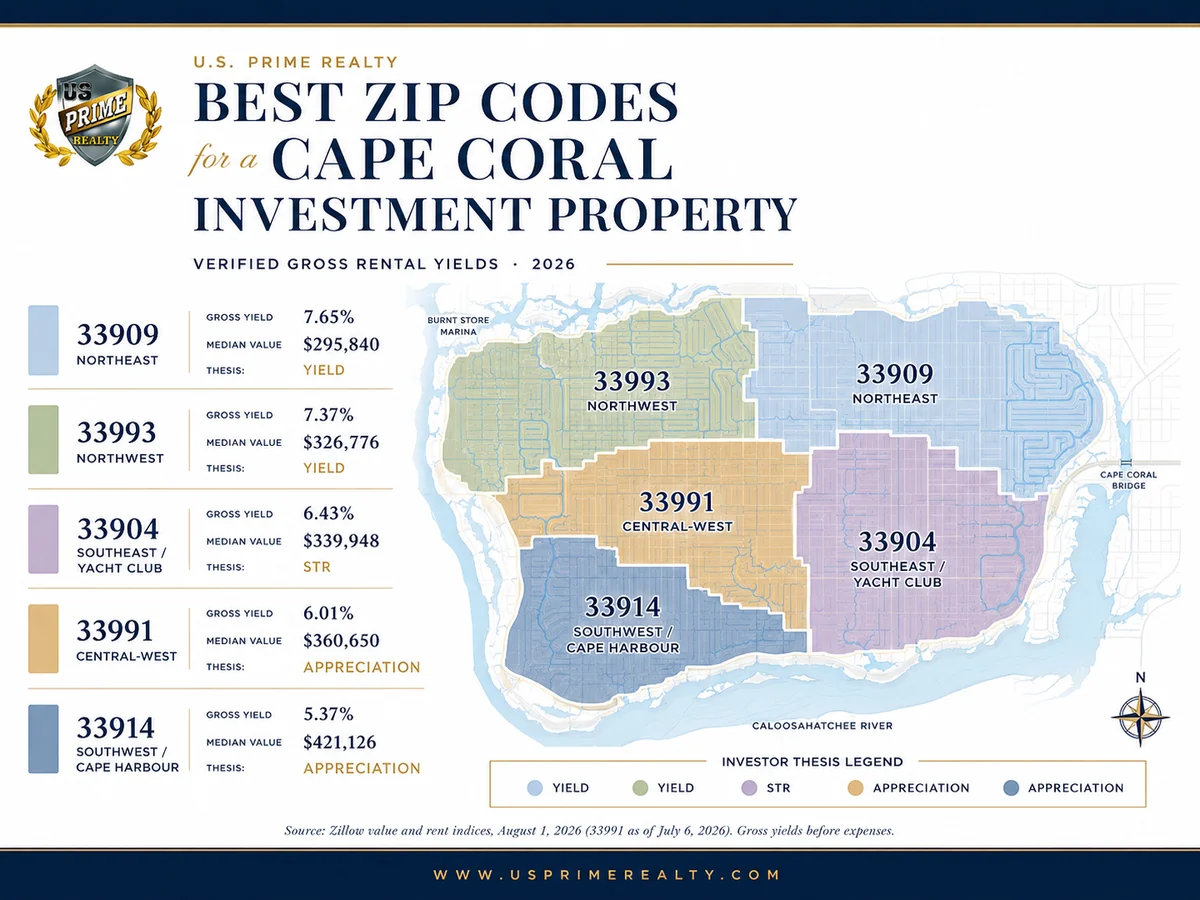
ZIP selection is the largest single variable in Cape Coral underwriting, and the relationship here is cleaner than in most markets: gross rental yield runs almost perfectly inverse to price.
| ZIP | Area | Median value | Median rent | Gross yield | Days |
|---|---|---|---|---|---|
| 33909 | Northeast | $295,840 | $1,887 | 7.65% | 77 |
| 33993 | Northwest | $326,776 | $2,006 | 7.37% | 79 |
| 33904 | Southeast / Yacht Club | $339,948 | $1,821 | 6.43% | 81 |
| 33991 | Central-west | $360,650 | $1,807 | 6.01% | 73 |
| 33914 | Southwest / Cape Harbour | $421,126 | $1,886 | 5.37% | 92 |
Source: Zillow value and rent indices, August 1, 2026 (33991 as of July 6, 2026). Gross yields before expenses.
The waterfront premium
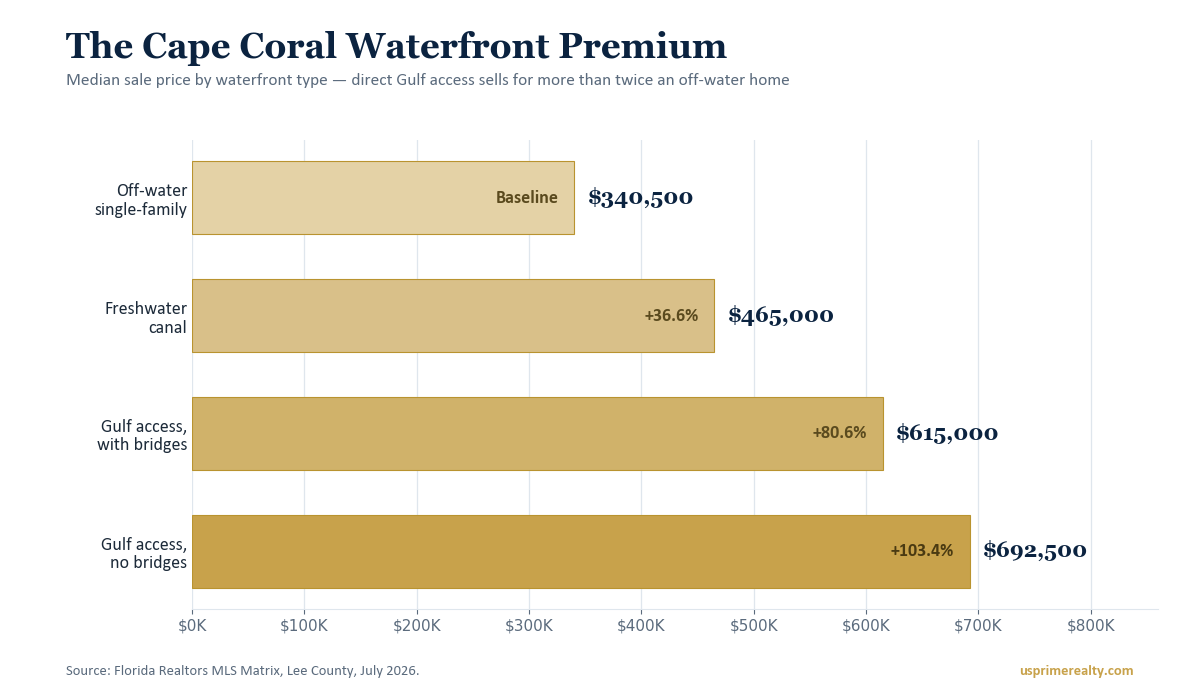
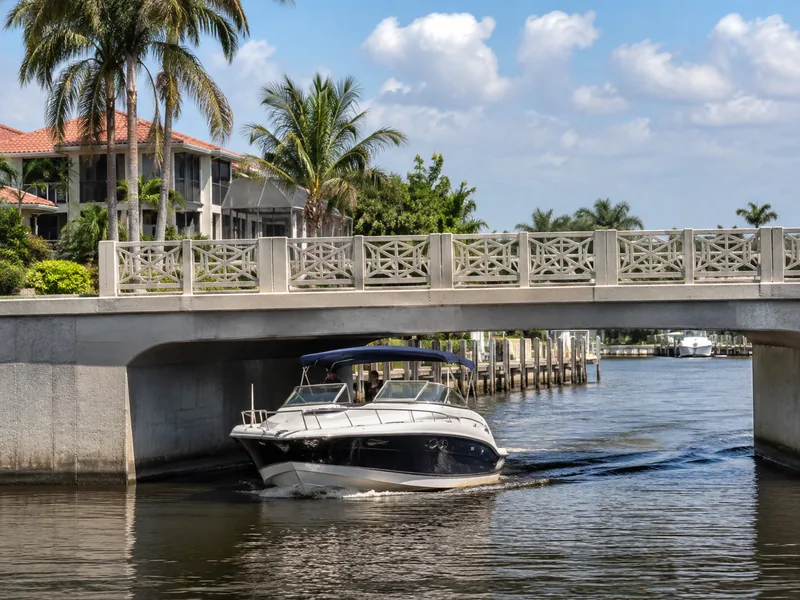
Cape Coral has more than 400 miles of navigable canals — a figure the city’s own communications office puts at more than any other city in the world. That is the entire investment thesis, and MLS data prices it precisely. Our Cape Coral community overview covers the neighbourhoods behind these numbers.
| Segment | Median price | Premium over off-water |
|---|---|---|
| Off-water single-family | $340,500 | Baseline |
| Freshwater canal | $465,000 | +36.6% |
| Gulf access, with bridges | $615,000 | +80.6% |
| Gulf access, no bridges (direct) | $692,500 | +103.4% |
Source: Florida Realtors MLS Matrix for Lee County, July 2026.
A direct Gulf-access home — no bridges between dock and open water — sells for more than twice an off-water home in the same city. The gap between Gulf access with and without bridges is $77,500, or 12.6%, which is what bridge clearance alone is worth. If a listing says “Gulf access” without specifying bridge count and clearance, that is the first question to ask, because it is the difference between two different assets.
Freshwater canal homes carry a 36.6% premium and are a genuinely different product: closed-system canals suited to smaller craft, fishing and views rather than blue-water boating. They rent well and cost meaningfully less to buy. But every canal lot, freshwater or Gulf access, carries seawall liability — and in this market that liability is larger than most buyers expect.
What a Cape Coral rental property really costs to operate
Florida operating costs catch out-of-state investors off guard, and Cape Coral stacks several layers that do not exist in inland markets. These are the verified 2026 numbers, taken from the taxing authority and the state insurance regulator rather than from estimator sites.
Property taxes: use the millage, not the median
Most Cape Coral tax estimates quote an effective rate near 1.1%. That figure is a median across all properties, including homesteaded owners whose assessments are capped by Save Our Homes at 3% a year. It does not apply to you.
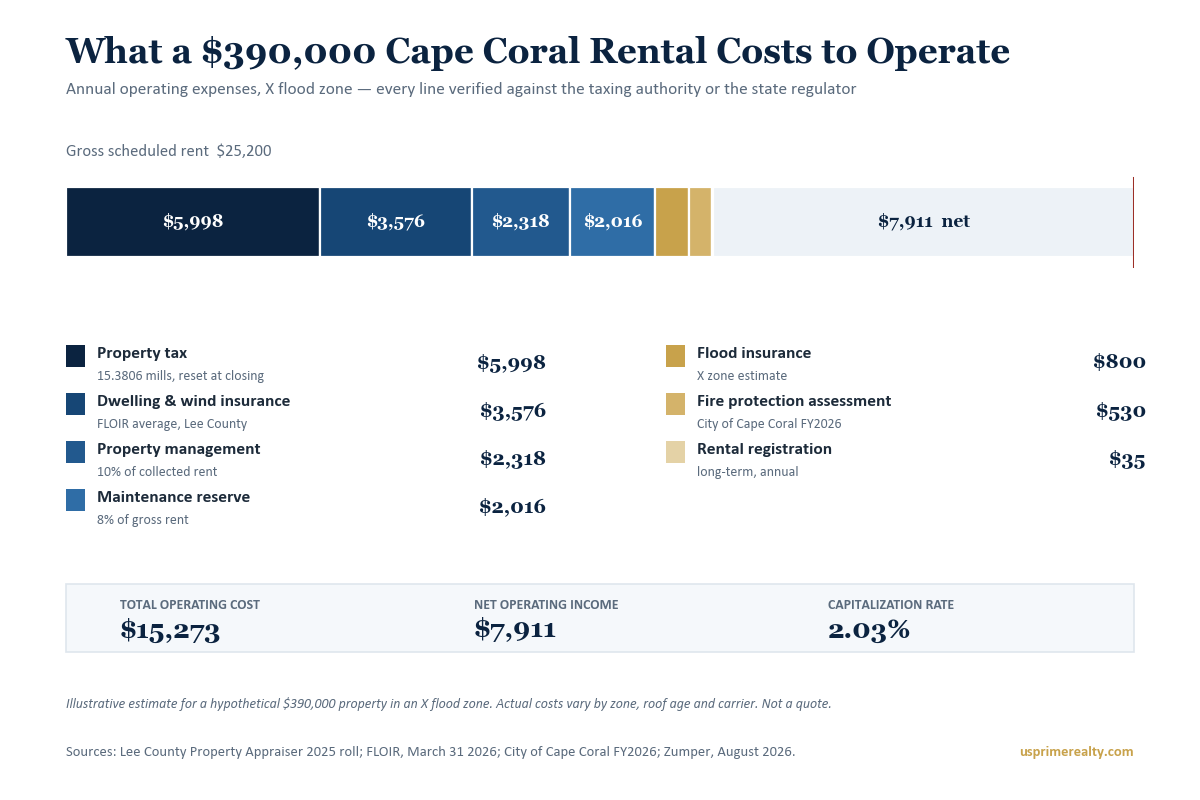
The Lee County Property Appraiser’s millage book shows the actual combined levy for taxing district 057, City of Cape Coral: 15.3806 mills on the 2025 roll, or 1.538% of taxable value. That is county general revenue, both school levies, the city’s own 5.1471 mills, library, fire and hazard districts, mosquito and hyacinth control, water management, and the voted parks debt.
On an investment purchase there is no homestead exemption and no assessment cap, so your taxable value resets to your purchase price at closing and the full millage applies. On a $390,000 home budget roughly $5,998 a year, plus a fire protection assessment averaging $529.76 — not whatever the seller currently pays, which may be capped decades below market.
Insurance: the regulator’s number
The Florida Office of Insurance Regulation publishes actual premium data in its Property Insurance Stability Report. As of March 31, 2026, the average Lee County homeowners premium including wind coverage is $3,576. Premiums decreased in 51 of Florida’s 67 counties from the previous report, so the market has eased somewhat from its peak.
Flood is separate and is where the range widens dramatically. In an X zone, expect roughly $400 to $1,200 a year. In an AE zone, $2,000 to $10,000. There is no published county-level average for flood, so these are agency estimates rather than regulator data — treat them as a planning range and get a quote. Check the designation on the FEMA Flood Map Service Center before you write an offer, and ask whether an elevation certificate exists, because it can move the number materially.
A realistic all-in insurance budget for a Cape Coral single-family rental in an X zone is $4,000 to $4,800 a year. In an AE zone, $5,600 to $13,600. Get written quotes from Florida-licensed carriers before you go under contract.
Seawalls: the number almost everyone gets wrong
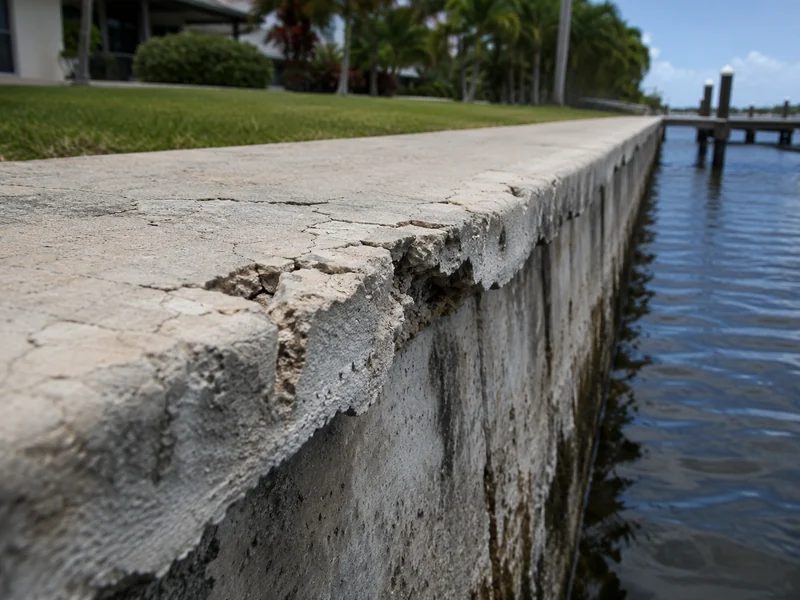
National cost guides put seawall work at $150 to $600 per linear foot. That is not this market. Southwest Florida marine contractors quote $700 to $1,300 per linear foot, and a typical 80 to 100 foot Cape Coral canal lot runs $60,000 to $120,000 including permitting.
On a $465,000 freshwater canal home that is 13% to 26% of the purchase price. Work requires local, state (Florida DEP) and federal (Army Corps of Engineers) permits, and projects run two to six months. Seawall condition does not appear in listing photographs and is not covered by a standard home inspection.
If you take one thing from this article: order an independent marine or seawall inspection on every canal-front property, before your inspection period expires. It is the single highest-return few hundred dollars you will spend in this market.
Everything else
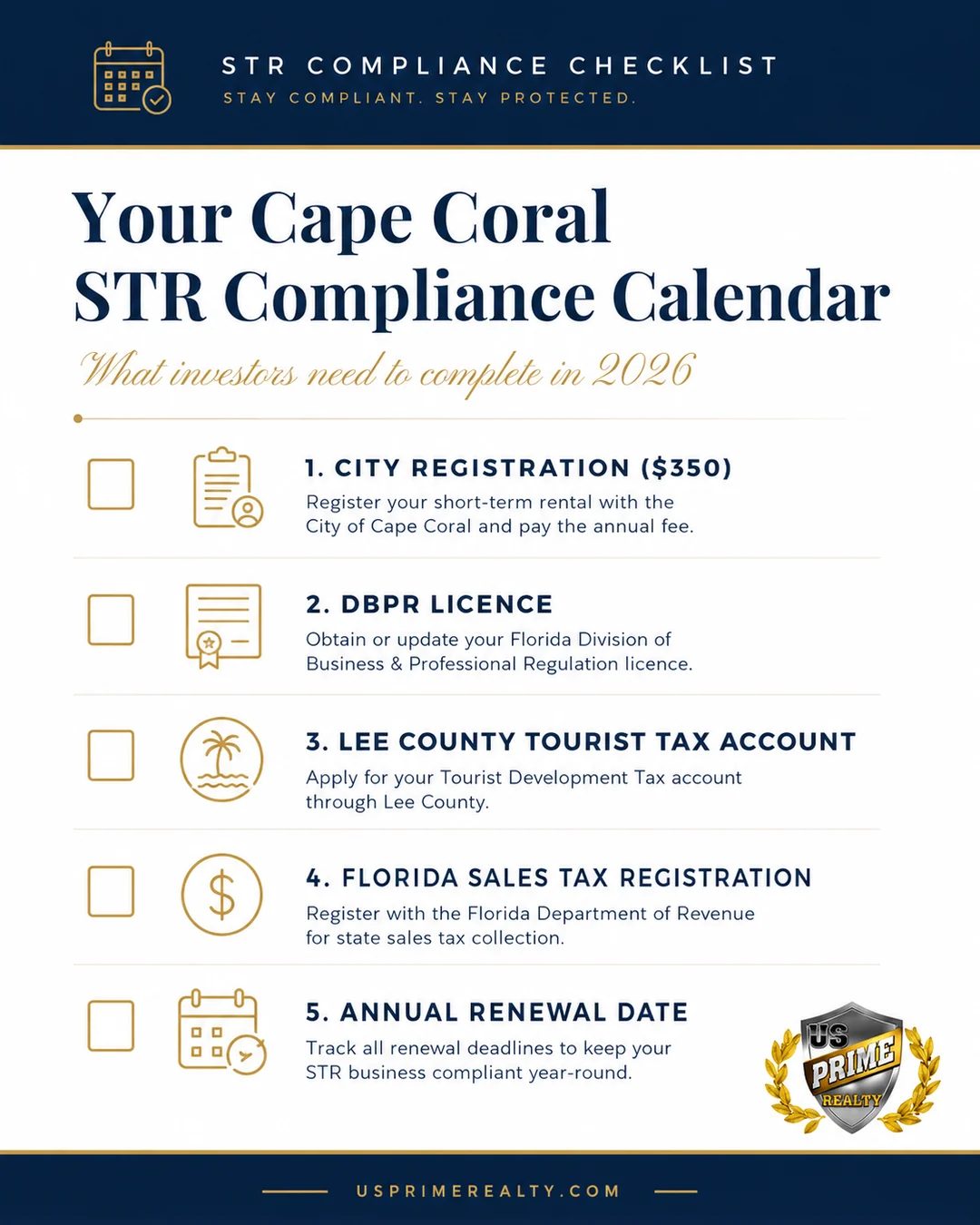
- Rental registration: $35 a year long-term, $350 a year short-term, $50 late fee past 30 days from your anniversary date.
- HOA fees: zero for most non-HOA single-family homes, up to several hundred dollars a month in gated communities. Verify per property.
- Maintenance reserve: budget 8% of gross rent minimum.
- Property management: market-typical is 8% to 12% of collected rent long-term, 20% to 30% short-term. Confirm with your manager — these are not regulated rates.
The cap rate math, shown in full
Most Cape Coral investor content quotes cap rates of 4% to 6.5%. Those are gross rental yields. A capitalization rate is net operating income divided by purchase price, and in Florida the gap is enormous because the expense load is enormous.
Here is the calculation with every assumption stated, using verified July and August 2026 figures.
| Line | Amount | Basis |
|---|---|---|
| Purchase price | $390,000 | SF median, July 2026 |
| Gross scheduled rent | $25,200 | $2,100/mo, Zumper Aug 2026 |
| Less vacancy at 8% | −$2,016 | Assumption |
| Effective gross income | $23,184 | |
| Property tax at 15.3806 mills | −$5,998 | Lee County Property Appraiser |
| Fire protection assessment | −$530 | City of Cape Coral FY2026 |
| Dwelling and wind insurance | −$3,576 | FLOIR, March 31, 2026 |
| Flood insurance, X zone | −$800 | Agency estimate |
| Rental registration | −$35 | City of Cape Coral, 2026 |
| Maintenance reserve at 8% | −$2,016 | Assumption |
| Property management at 10% | −$2,318 | Assumption |
| Net operating income | $7,911 | |
| Capitalization rate | 2.03% | NOI ÷ purchase price |
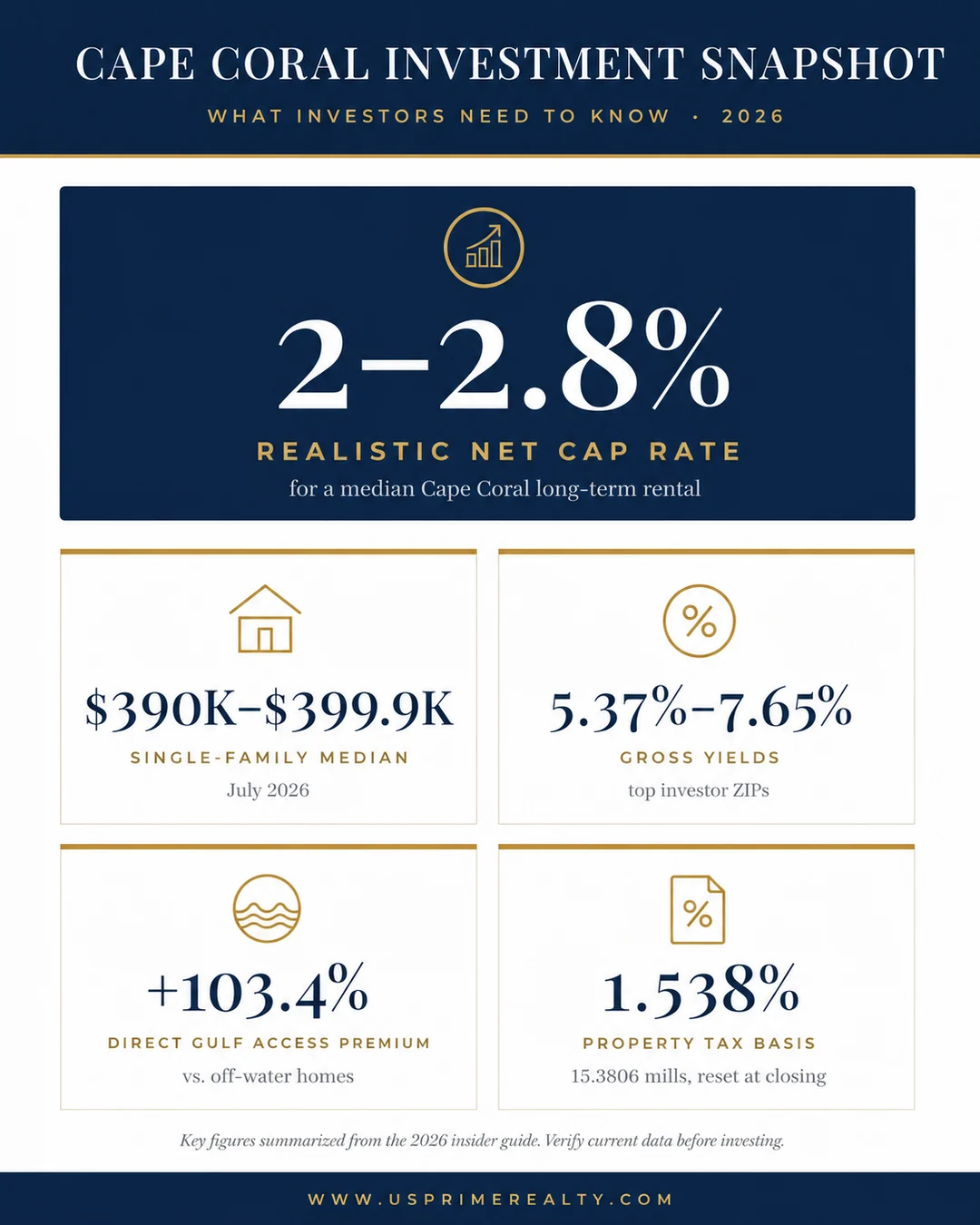
Self-manage and carry no flood policy, and the same house produces $11,029 of net operating income and a 2.83% cap rate. That is the realistic band for a median Cape Coral long-term rental in 2026: roughly 2% to 2.8%, not 4% to 6.5%. Note that this excludes any seawall reserve — on a canal lot, add one.
Now add leverage. With 25% down and investment-property pricing above the Freddie Mac 30-year average of 6.67%, annual debt service on a $292,500 loan runs close to $24,000. Against $7,911 of net operating income, that is roughly $16,000 a year of negative cash flow on about $109,000 invested — a cash-on-cash return near −14.7%. Run your own numbers with our mortgage calculator.
A median-priced Cape Coral single-family home, bought with conventional leverage and rented long-term, does not cash flow in 2026. Anyone telling you otherwise is quoting a gross yield or omitting the insurance line. Cape Coral works on three specific theses: an all-cash or low-leverage hold where 2% to 3% net plus appreciation is acceptable; a short-term rental in a location that materially outperforms the market average; or a waterfront appreciation play on a five-to-ten-year horizon. It does not work as a leveraged cash flow play at the median, and we would rather tell you that now than after closing.
Cape Coral short term rental rules and financing for 2026
Cape Coral permits short-term rentals citywide, and Florida Statute 509.032(7) provides that a local ordinance “may not prohibit vacation rentals or regulate the duration or frequency of rental of vacation rentals.” That preemption carries one important caveat: it does not apply to ordinances adopted on or before June 1, 2011, which is why a handful of Florida cities still enforce restrictions that would otherwise be unlawful. Cape Coral is not one of them. Compliance, however, is not optional.
| Requirement | Authority | Detail |
|---|---|---|
| Short-term registration | City of Cape Coral | $350 per property per year (6 months or less) |
| Long-term registration | City of Cape Coral | $35 per property per year (over 6 months) |
| Renewal | City of Cape Coral | Anniversary date; $50 late fee past 30 days |
| Vacation rental licence | Florida DBPR | Required if rented more than 3 times a year for under 30 days. $50 application + $10 training + $170–$350 licence |
| Tourist development tax | Lee County Clerk | 5% of gross rent on stays of 6 months or less |
| Sales tax and surtax | Florida DOR | 6% state + 0.5% Lee County discretionary surtax |
| Total tax on gross rent | — | 11.5% |
Penalties are specific. Operating an unregistered short-term rental draws $500 for a first violation and $1,000 for a repeat. Long-term rentals are $250 and $500. Misrepresenting your rental type — registering long-term while operating short-term — carries $1,000 for a first offence and $2,000 for a repeat within 36 months. Registration runs through the city’s Energov Citizen Self Service portal.
What short-term rentals actually earn here
Two independent datasets measure this market and they disagree, so here are both. AirDNA reported 7,842 active listings as of August 5, 2026, at a $264 average daily rate, 55% occupancy and $23,300 annual revenue per listing, with revenue up 5.7% year over year. AirROI, measuring a smaller listing universe as of August 8, 2026, reported $294, 37.2% occupancy and $27,395 annual revenue, with March peaking near $6,278 and September bottoming near $2,448.
Read that against the long-term numbers. A market-average short-term rental grosses $23,000 to $27,000. A long-term lease at $2,100 a month grosses $25,200 with far lower costs, a $35 registration instead of $350, no DBPR licence, no 11.5% tax remittance, and no cleaning or furnishing budget. The short-term case in Cape Coral is not the market average — it is the specific property that beats it: direct Gulf access, heated pool, boat lift, professional management. On the median property, short-term is more work for the same money.
DSCR loans and financing
For domestic investors, DSCR loans are the primary financing tool for a Cape Coral investment property. They underwrite on the property’s rental income rather than personal tax returns, which suits investors holding multiple properties or running income through an LLC. Market-typical terms are a minimum debt service coverage ratio of 1.0 to 1.25, 20% to 25% down, and documented rent comparables or an executed lease.
One caveat worth stating plainly: DSCR is a non-agency product. Unlike a conforming loan, there is no Fannie Mae or Freddie Mac matrix setting the rules, so terms vary by lender and move with capital markets. Treat those figures as the range we see rather than a standard, and get a written term sheet before you model anything. Our financing overview walks through the options.
Price expectations matter. The Freddie Mac Primary Mortgage Market Survey put the 30-year fixed at 6.67% on August 13, 2026, and investment-property loans price above owner-occupied. Underwrite nearer 7.25%. At a 2% to 3% cap rate, positive leverage is arithmetically impossible — debt on a Cape Coral rental at current rates is dilutive to yield and is buying appreciation exposure, not income.
Foreign nationals have solid access through portfolio and international buyer programmes, typically at 30% to 35% down with six months of reserves — again, lender-specific rather than standardised. Florida remains the top destination for international buyers, taking 20% of all foreign purchases of U.S. homes between April 2025 and March 2026 according to the National Association of Realtors, with 48% of foreign buyers paying all cash.
Two statutory items apply. At closing you sign an affidavit confirming you are not a restricted “foreign principal” under Florida’s SB 264, which limits certain purchases connected to seven designated countries; parts of the statute remain under federal court challenge and it contains exemptions, including for non-tourist visa holders buying a single residential property under two acres. Separately, when a foreign owner later sells, FIRPTA requires the buyer to withhold 15% of the amount realised, with no withholding where the buyer will use it as a residence and the price is $300,000 or less, and a reduced 10% rate on residential sales up to $1 million. Both are legal questions — engage a Florida real estate attorney and a CPA. U.S. Prime Realty works with international investors regularly and can connect you with lenders and counsel who specialise in cross-border purchases, in English, Spanish, Portuguese, Hebrew or Russian.
Buying remotely without getting burned
Remote purchasing is routine in Cape Coral and the local systems for it are well developed. Clean remote closings come down to four property-specific checks that photographs will not give you.
Seawall condition
By far the largest deferred-maintenance risk on any canal lot. Southwest Florida contractors quote $700 to $1,300 per linear foot, putting a typical 80 to 100 foot replacement at $60,000 to $120,000 — and it needs local, Florida DEP and Army Corps permits, with a two-to-six-month timeline. It does not appear in listing photos and is not covered by a standard home inspection. Order an independent marine inspection on every canal-front property.
Flood zone designation
The difference between an AE zone and an X zone can be several thousand dollars a year and determines lender requirements. Verify on the FEMA Flood Map Service Center, not the listing sheet, and ask whether an elevation certificate exists.
Permit history
Pull permits on anything you are serious about. Unpermitted additions and undocumented post-hurricane repairs create title and insurance complications that surface late and expensively.
Canal type and bridge clearance
Direct Gulf access carries a 103% premium over off-water and 12.6% over bridged access. Confirm bridge count and clearance for the boat size your target renter actually owns — it changes both your income projection and your resale pool.
The highest-leverage decision a remote investor makes is choosing the agent on the ground — someone who knows which canals command premiums, which bridges limit which hulls, and how to read a rent comparable. U.S. Prime Realty’s Cape Coral office works specifically with buyers and investors in this market, with agents who live in the communities they represent. Whether you are looking at a Gulf-access home in 33904 or a value-add Cape Coral rental property in 33909, we will walk you through the real income potential before you book a flight.

The bottom line
A Cape Coral investment property makes sense in 2026 for a specific investor: one who can hold five to ten years, who is buying waterfront scarcity rather than a rent roll, and who is clear-eyed that leverage at current rates buys appreciation exposure, not monthly income.
The benchmarks to carry into your underwriting:
- Single-family median $390,000 to $399,900; condo median $197,450 to $205,000 (July 2026)
- Average single-family house rent $2,100 a month, flat year over year (Zumper rent research, August 2026)
- Property tax 15.3806 mills — 1.538% of your purchase price, reset at closing, no homestead cap
- Homeowners insurance $3,576 (FLOIR, March 2026); flood $400 to $10,000 depending on zone
- Gross yields 5.37% in 33914 to 7.65% in 33909; realistic net cap rates 2% to 2.8%
- Seawall replacement $700 to $1,300 per linear foot — budget $60,000 to $120,000 on any canal lot
- Direct Gulf access commands a 103% premium over off-water
- Short-term rentals gross $23,000 to $27,000 at market average, taxed at 11.5% of gross
If you want these numbers run against specific listings, the investor team at U.S. Prime Realty’s Cape Coral office works with domestic and international buyers and can model real rent comparables and operating costs before you make an offer. Start with our investment property portal or schedule a consultation with an agent who knows this market from the inside.
Get the Real Cape Coral Numbers Before You Fly Down
ZIP-by-ZIP yields, millage-accurate tax estimates, and seawall risk assessment.
Frequently asked questions
Is Cape Coral a good place to buy an investment property in 2026?+
Is Cape Coral a good place to buy an investment property in 2026?
It depends entirely on your strategy and hold period. Cape Coral is a poor fit for a leveraged long-term rental: at a median single-family price near $390,000 and average house rent of $2,100 a month, a financed purchase produces a net cap rate near 2% and roughly $16,000 a year of negative cash flow. It is a strong fit for a low-leverage or all-cash buyer holding five to ten years, for a waterfront appreciation play, or for a short-term rental on a property that beats the market average. Values are down 5.0% year over year and nearly 70% of listings have taken a price reduction, so the entry point is materially better than it was two years ago.
Why are Cape Coral home prices going down?+
Why are Cape Coral home prices going down?
Cape Coral is working through a supply and carrying-cost correction rather than a demand collapse. Inventory expanded after the pandemic buying surge, insurance costs across coastal Florida rose sharply, and mortgage rates near 6.7% priced out a segment of buyers. Zillow’s Home Value Index for Cape Coral was $337,507 as of July 31, 2026, down 5.0% year over year, with roughly 4.5 months of single-family supply. Condominiums have fallen further than single-family homes, down 8.9%, driven largely by insurance and association assessment pressure.
What is the best ZIP code in Cape Coral for investment?+
What is the best ZIP code in Cape Coral for investment?
It depends on whether you want yield or appreciation, and the two run in opposite directions. On Zillow value and rent data as of August 1, 2026, ZIP 33909 in the northeast leads on gross rental yield at 7.65% with a median value of $295,840, followed by 33993 at 7.37%. ZIP 33904 near the Yacht Club is third at 6.43% but has the best short-term rental fundamentals. ZIP 33914 in the southwest has the highest values at $421,126 and the lowest yield at 5.37% — the appreciation play, not the income play. One factor the yield table does not show: 33909 and 33993 are largely off-water, so they carry no seawall liability.
What is a good cap rate in Cape Coral?+
What is a good cap rate in Cape Coral?
Be careful with this number, because most Cape Coral content quotes gross rental yields and calls them cap rates. Gross yields do run 5.4% to 7.7% across the city’s investor ZIPs. Actual capitalization rates, after property tax at the full 15.3806-mill levy, Lee County insurance averaging $3,576, flood coverage, maintenance reserve and management, land at roughly 2% to 2.8% on a median-priced single-family home. Any Cape Coral pro forma showing a 6% cap rate is either omitting the insurance line, using a homesteaded tax rate that does not apply to investors, or quoting a gross yield.
How much are property taxes on a Cape Coral investment property?+
How much are property taxes on a Cape Coral investment property?
Use the millage, not the commonly quoted 1.1% effective rate — that figure is a median across all properties including homesteaded owners capped by Save Our Homes, and it does not apply to you. The Lee County Property Appraiser’s millage book puts the total combined levy for the City of Cape Coral taxing district at 15.3806 mills on the 2025 roll, or 1.538% of taxable value. On an investment purchase there is no exemption and no assessment cap, so your taxable value resets to your purchase price at closing. On a $390,000 home budget roughly $5,998 a year plus a fire protection assessment averaging $529.76 — not whatever the seller currently pays.
How much is insurance on a Cape Coral rental property?+
How much is insurance on a Cape Coral rental property?
The Florida Office of Insurance Regulation puts the average Lee County homeowners premium including wind at $3,576, as of March 31, 2026 — and premiums fell in 51 of Florida’s 67 counties from the prior report, so the market has eased from its peak. Flood is a separate policy and widens the range considerably: roughly $400 to $1,200 a year in an X zone, $2,000 to $10,000 in an AE zone. All-in, budget $4,000 to $4,800 for an X-zone rental and $5,600 to $13,600 in an AE zone. Roof age and elevation certificate drive the number more than anything else, so get written quotes before going under contract.
How much does it cost to replace a seawall in Cape Coral?+
How much does it cost to replace a seawall in Cape Coral?
Far more than national cost guides suggest. Those quote $150 to $600 per linear foot; Southwest Florida marine contractors quote $700 to $1,300, which puts a typical 80 to 100 foot Cape Coral canal lot at $60,000 to $120,000 including permitting. Work requires local, Florida DEP and Army Corps of Engineers permits and runs two to six months. Seawall condition does not appear in listing photographs and is not covered by a standard home inspection, which makes it the most commonly missed defect in remote purchases. Order an independent marine or seawall inspection on any canal-front property before your inspection period expires.
Can you Airbnb a house in Cape Coral?+
Can you Airbnb a house in Cape Coral?
Yes. Cape Coral permits short-term rentals citywide, and Florida Statute 509.032(7) prevents local ordinances from prohibiting vacation rentals or regulating their duration or frequency — though that preemption does not apply to ordinances adopted on or before June 1, 2011. You must register with the city as a short-term rental at $350 per property per year, obtain a Florida DBPR vacation rental licence if you rent for under 30 days more than three times a year ($50 application, $10 training, $170 to $350 licence), and remit 11.5% in tax on gross rent: 6% Florida sales tax, 0.5% Lee County surtax, and the 5% tourist development tax. Operating unregistered draws $500 for a first violation and $1,000 for a repeat.
How much do Airbnbs make in Cape Coral?+
How much do Airbnbs make in Cape Coral?
Two independent datasets put market-average annual revenue between $23,300 and $27,395 per listing. AirDNA reported a $264 average daily rate at 55% occupancy as of August 5, 2026; AirROI reported $294 at 37.2% occupancy as of August 8, 2026, measuring a smaller listing set. Seasonality is severe: March peaks near $6,278 a month while September bottoms near $2,448. Set that against a long-term lease at $2,100 a month grossing $25,200 with far lower costs and no 11.5% tax remittance, and short-term only wins on properties that clearly beat the market average.
What is the difference between Gulf access and freshwater canal in Cape Coral?+
What is the difference between Gulf access and freshwater canal in Cape Coral?
Gulf-access canals connect to the Caloosahatchee River and out to open water; freshwater canals are a closed system used for smaller craft, fishing and views. The market prices the difference precisely. In July 2026, MLS medians were $340,500 off-water, $465,000 for freshwater canal, $615,000 for Gulf access with bridges, and $692,500 for direct Gulf access with no bridges. Direct Gulf access carries a 103% premium over off-water, and the 12.6% gap between bridged and unbridged access is what clearance alone is worth. Always confirm bridge count and height for the boat size your target renter owns.
Do I need flood insurance in Cape Coral?+
Do I need flood insurance in Cape Coral?
If the property sits in a FEMA Special Flood Hazard Area, typically an AE zone, and you have a federally backed mortgage, flood insurance is mandatory. In an X zone it is optional but generally worth carrying in a city built on canals. Verify the designation on the FEMA Flood Map Service Center rather than relying on the listing, and ask whether an elevation certificate exists — it can lower the premium materially. Expect roughly $400 to $1,200 a year in an X zone and $2,000 to $10,000 in an AE zone; there is no published county-level average, so a quote is the only reliable number.
Can foreigners buy investment property in Cape Coral, Florida?+
Can foreigners buy investment property in Cape Coral, Florida?
Generally yes. There is no citizenship or residency requirement to own U.S. real estate, and Florida is the leading destination for international buyers, taking 20% of all foreign purchases of U.S. homes between April 2025 and March 2026, with 48% of foreign buyers paying all cash. Financing is typically portfolio or DSCR at 30% to 35% down plus six months of reserves. Two things to plan for: Florida’s SB 264 restricts certain purchases by people and entities tied to seven designated countries and requires a buyer affidavit at closing, with parts of the statute still in federal litigation and exemptions including non-tourist visa holders buying a single residential property under two acres. And when a foreign owner sells, FIRPTA requires the buyer to withhold 15% of the amount realised, with no withholding on a residence at $300,000 or less and a reduced 10% rate up to $1 million. Engage a Florida real estate attorney and a CPA experienced in cross-border ownership.
Should I buy a long-term or short-term rental in Cape Coral?+
Should I buy a long-term or short-term rental in Cape Coral?
On the median property, long-term is the simpler and roughly equivalent choice. A long-term lease at $2,100 a month grosses $25,200 with a $35 registration and no tax filings. A market-average short-term rental grosses $23,300 to $27,395 but carries $350 registration, a DBPR licence, 11.5% tax on gross, furnishing, cleaning, and management at 20% to 30%. Short-term wins decisively only on properties that beat the market average — direct Gulf access, heated pool, boat lift, professionally managed — which in practice means 33904 and waterfront 33914. Inland 33909 and 33993 underwrite better as long-term holds, and carry no seawall exposure.
How much money do I need to invest in Cape Coral real estate?+
How much money do I need to invest in Cape Coral real estate?
For a $350,000 entry-level property on a DSCR loan at 20% to 25% down, plan on $70,000 to $87,500 down plus 2% to 4% closing costs. Foreign national programmes typically require 30% to 35% down plus six months of reserves. Then add a first-year cushion, because three costs surprise people: property tax resets to your purchase price at the full 15.3806-mill levy with no homestead cap, insurance runs $4,000 to $4,800 in an X zone, and any canal lot carries $60,000 to $120,000 of seawall exposure if the wall is near end of life. Keep $15,000 to $25,000 liquid beyond closing on an off-water property, considerably more on a canal lot, and plan for negative monthly cash flow on a financed long-term rental.
U.S. Prime Realty LLC. Serving Florida since 2008. This article is general market information, not investment, tax or legal advice. All figures are dated and sourced; verify current data and consult licensed professionals before purchasing.
Share This
- cape-coral,
- DSCR,
- Gulf access,
- international buyers,
- investment property,
- Lee County,
- rental property,
- short term rental,
- waterfront
About The Author

Isbely Glazer - Founder and Broker of U.S. Prime Realty
Isbely brings over 20 years of experience across Florida’s key markets. She leads with a client-first approach, combining deep market insight with a commitment to trust, results, and long-term relationships.
Business Info


Recent Posts

Orlando Florida Luxury Real Estate: 2026 Market Guide
Explore Orlando Florida luxury real estate in 2026: prices, Windermere, Winter Park, Lake Nona, 2026 housing data, lakefront costs and buyer tips.
Pre-Construction Properties in Florida: Discover New Homes for Sale Across the State
Discover pre-construction properties in Florida, from Miami and Sunny Isles condos to Naples, Cape Coral and Orlando new homes. Explore options with U.S. Prime Realty.
New Construction vs. Pre-Construction Homes in Florida: Which Is Right for You?
New construction vs. pre-construction homes in Florida: compare costs, timelines, deposits, builder incentives and risks before you buy.